

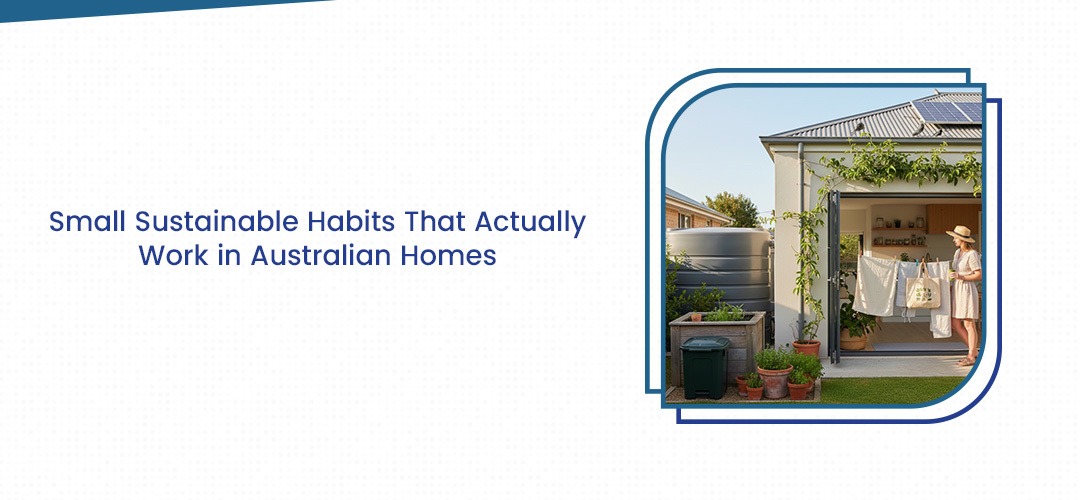

Small Sustainable Habits That Actually Work in Australian Homes

Eversabz
Key Takeaways
Sustainability in Australian homes does not require dramatic lifestyle changes. Small habits such as mindful purchasing, reducing waste, choosing durable products, conserving energy and water, and using trusted sustainable resources can gradually create long term environmental and financial benefits. Practicality, accessibility, and cultural familiarity remain central to long lasting adoption.
Sustainability is often presented as a major commitment that demands lifestyle overhauls, expensive products, or strict routines. In reality, most Australian households already practise sustainable behaviours without consciously labelling them as such. The real shift happening today is not about starting from zero — it is about becoming more intentional with choices that already align with practicality and long term thinking.
Across Australia, conversations about environmental responsibility have become increasingly common. Climate variability, bushfire seasons, water scarcity concerns, and rising energy costs have all influenced how households think about consumption. Yet what stands out is that sustainable living in Australia rarely begins with ideology. It begins with practicality.
When sustainable habits align with comfort, cost savings, and daily convenience, they tend to last.
Buying Less, Choosing Better
One of the most powerful sustainable habits is surprisingly simple: buy less, but choose better.
Australian households have long valued quality and longevity. Products that last several years are preferred over items that require frequent replacement. This cultural inclination naturally supports sustainability, even when environmental motives are secondary.
Instead of asking “Is this cheap?”, many families now ask:
- Will this last?
- Can it be repaired?
- Is it worth the long term cost?
This shift from upfront pricing to lifecycle value is subtle but significant. Durable furniture, quality appliances, well made clothing, and reusable home essentials reduce landfill waste while also lowering cumulative expenses.
Access to reliable information has made this easier. When people explore options through a trusted sustainable marketplace, they can evaluate products based on quality, sourcing, and long term usability without spending hours researching independently.
This simplification reduces friction — and reduced friction increases adoption.
Waste Reduction That Fits Daily Life
Waste management has become one of the most visible sustainability practices in Australian homes.
Recycling systems are well established across cities and regional areas. However, the shift today extends beyond recycling. Households are increasingly focusing on waste prevention rather than just waste sorting.
Common practical habits include:
- Choosing products with minimal packaging
- Using reusable shopping bags
- Avoiding single use plastics
- Composting food scraps
- Repurposing glass jars and containers
Individually, these changes may seem small. Collectively, they significantly reduce landfill contribution.
Many families also report that waste reduction leads to more organised kitchens and storage areas. Fewer disposable items mean less clutter.
Sustainability, in this sense, improves both environmental and domestic efficiency.
Importantly, these habits require no dramatic lifestyle change. They integrate into routines naturally.
Energy Efficiency as a Financial Strategy
Energy consumption is a major concern in Australia, where electricity costs have steadily increased over time. For many households, sustainability is closely tied to managing energy bills.
Small behavioural changes often deliver noticeable savings:
- Switching off unused appliances
- Replacing incandescent bulbs with LED lighting
- Installing energy efficient white goods
- Using programmable thermostats
- Maximising natural ventilation
In warmer regions, passive cooling strategies such as shading, insulation, and cross ventilation reduce reliance on air conditioning. In cooler regions, insulation improvements lower heating demand.
Solar panel adoption has also increased significantly across Australian suburbs. While installation requires upfront investment, the long term financial returns often align with sustainability goals.
The key point is that energy efficiency is not driven purely by environmental ideology. It is driven by practicality.
When environmental responsibility overlaps with cost savings, adoption becomes sustainable in itself.
Water Conservation as Everyday Awareness
Water management remains highly relevant across many parts of Australia. Periodic droughts and regional water restrictions have shaped public consciousness for decades.
Small household habits make a measurable difference:
- Fixing leaking taps promptly
- Installing water efficient showerheads
- Collecting rainwater
- Using drought resistant landscaping
- Running full loads in dishwashers and washing machines
In some households, grey water reuse for gardens has become common. These practices often arise from necessity rather than activism, yet they align perfectly with sustainable living principles.
The Australian context reinforces an important lesson: sustainability often succeeds when it responds to local realities.
Sustainable Food Practices in Australian Kitchens
Food consumption offers another practical sustainability opportunity.
Many Australian households already practise:
- Buying seasonal produce
- Supporting local farmers markets
- Cooking at home
- Minimising food waste
Seasonal eating reduces transport emissions and often improves nutritional quality. Planning meals in advance reduces impulse purchases and food spoilage. Composting organic waste supports soil regeneration and garden productivity.
There is also growing interest in understanding where food comes from. Ethical sourcing, reduced packaging, and sustainable agriculture practices are increasingly considered in purchasing decisions.
Again, the shift is gradual rather than radical. Families adapt habits that fit their preferences and budget.
The Role of Repair and Reuse Culture
Repair culture is experiencing renewed interest in Australia.
Rather than replacing items immediately, many households now explore repair options first. From electronics to clothing, the mindset is shifting from disposable to maintainable.
Repair cafes and local community workshops are growing in popularity. These spaces encourage practical skill development while extending product lifespans.
This behaviour reduces waste, saves money, and strengthens community engagement simultaneously.
It also reinforces the idea that sustainability does not always require buying something new. Sometimes it requires keeping something old.
Emotional Sustainability and Home Wellbeing
An often overlooked aspect of sustainable living is emotional wellbeing.
Cluttered environments can create subtle stress. Impulsive purchases often lead to unused items occupying space. Thoughtful consumption, by contrast, produces calmer and more organised living spaces.
When households prioritise durability and necessity, possessions tend to have clear purpose. This clarity improves daily comfort.
Many families report that conscious purchasing leads to greater appreciation of what they already own. Rather than constantly seeking new items, they focus on maintaining and valuing existing ones.
Sustainability, in this sense, supports psychological as well as environmental balance.
Community Influence and Social Normalisation
Sustainable habits spread socially.
In Australia, sustainability conversations frequently occur within neighbourhood groups, workplaces, schools, and online forums. When individuals observe peers adopting practical eco friendly behaviours, hesitation decreases.
Community composting initiatives, local clean up events, and shared gardening projects reinforce responsible behaviour through participation.
Importantly, these changes are rarely imposed. They are normalised gradually.
When sustainable actions become common, they stop feeling exceptional.
Flexibility Across Australia’s Diverse Regions
Australia’s geographic diversity means sustainability cannot follow a rigid template.
What works in coastal urban Sydney may differ from rural Queensland or regional Western Australia. Climate conditions, water availability, housing design, and lifestyle patterns vary widely.
Therefore, successful sustainable habits tend to be adaptable rather than prescriptive.
Households experiment:
- Some prioritise solar adoption.
- Others focus on water conservation.
- Some emphasise waste reduction.
- Others invest in durable home upgrades.
The common factor is practicality.
Accessibility and Digital Discovery
Even motivated households can struggle if sustainable products are difficult to find. Accessibility has improved dramatically through digital platforms that consolidate responsible options into structured ecosystems.
When consumers can easily explore verified sustainable solutions, the adoption barrier lowers significantly.
Convenience determines whether awareness translates into action.
If sustainable choices require excessive effort, adoption slows. If they integrate seamlessly into shopping routines, they persist.
Financial Stability and Long Term Thinking
Sustainability in Australian homes is increasingly viewed through the lens of financial resilience.
Durable goods reduce replacement costs.
Energy efficiency lowers utility bills.
Water conservation reduces usage fees.
Repair culture extends product lifespans.
Over time, these savings accumulate.
Rather than seeing sustainability as an added expense, many households recognise it as a long term financial strategy.
This reframing has played a significant role in mainstream adoption.
Moving Beyond Trends Toward Habit Formation
Sustainability trends come and go, but habits endure.
The key difference lies in integration. When sustainable actions align with daily routines, they become automatic.
Examples:
- Carrying reusable bags becomes second nature.
- Switching off lights becomes routine.
- Choosing durable products becomes standard evaluation.
Habit formation requires simplicity. The more practical the action, the more likely it will continue.
The Gradual Future of Sustainable Living in Australia
Looking ahead, sustainability in Australian homes is unlikely to be defined by radical transformation. Instead, it will continue evolving through incremental improvements.
Technology will improve product efficiency.
Information access will increase transparency.
Consumers will prioritise lifecycle value.
Responsible businesses will adapt to meet expectations.
The pace may vary, but the direction appears steady.
Sustainability is becoming embedded in everyday decision making rather than positioned as a separate lifestyle category.
Conclusion
Small sustainable habits in Australian homes are not about perfection. They are about progress.
When sustainability aligns with practicality, comfort, and affordability, it becomes sustainable in the truest sense of the word.
Australian households are not abandoning convenience or financial responsibility. Instead, they are refining their habits in response to environmental realities and economic considerations.
Small steps — consistently practised — create meaningful long term impact.
And perhaps most importantly, these steps feel realistic.